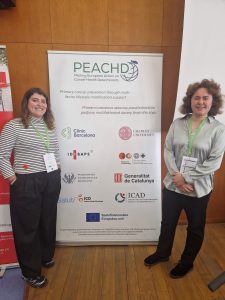
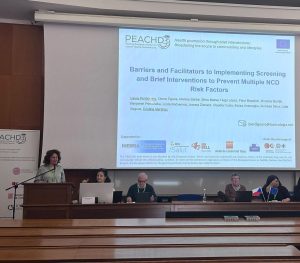
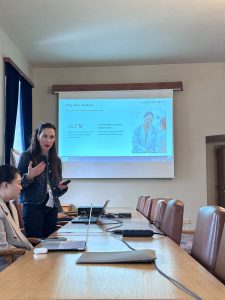
The Tobacco Control Unit (UCT) of the Catalan Institute of Oncology (ICO) participated in the final conference of the European project PEACHD , held jointly with the INEBRIA 2026 congress in Prague from October 14 to 16.
The PEACHD project, which runs from February 2024 to January 2027, brings together entities from Poland, the Czech Republic, Portugal and Spain with the aim of developing an integrated brief intervention to address several risk factors related to cancer, such as alcohol and tobacco consumption, unhealthy diet, physical inactivity and sun exposure. The project places a special emphasis on vulnerable populations, including people in socio-economic disadvantage and displaced people.
As the lead of Work Package 3 (WP3) , the ICO team has carried out a systematic review of the scientific literature and a needs and gaps analysis in the three pilot scenarios of the project: Poland, Czechia and Catalonia. This work has provided the necessary scientific basis to adapt both the intervention and the implementation strategies to the needs, resources and particularities of each context.
The systematic review highlighted the importance of adapting interventions to the cultural and individual needs of each population , involving health professionals, community organizations and target groups, and integrating prevention into routine care practice through training, leadership and the availability of appropriate resources.
For its part, the needs and gaps analysis identified differences between the pilot scenarios in terms of the time available to carry out the interventions and the prioritized cancer risk factors . It also detected shared barriers related to the availability of resources, training needs and the complexity of the interventions.
The final conference was an opportunity to share the progress of the project, exchange experiences between the participating teams and reflect on the results achieved in this final phase. The work developed within the framework of WP3 reinforces the importance of involving the different key actors and adapting strategies to each context to design integrated, sustainable and equitable cancer prevention interventions.