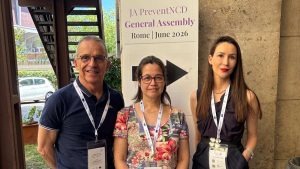
The Tobacco Control Unit (UCT) of the Catalan Institute of Oncology has actively participated in the 2026 General Assembly of the Joint Action PreventNCD , a key event in the European field of non-communicable diseases (NCD) prevention . The meeting, held in Rome on 9, 10 and 11 June, brought together representatives of the 25 countries that are part of the project with the aim of consolidating the progress achieved and strengthening international collaboration.
The Catalan Institute of Oncology is one of more than 100 partners that make up this European initiative, which aims to reduce the burden of cancer and other non-communicable diseases, as well as the associated risk factors. The project promotes a comprehensive approach —both at the individual and population level— and supports member states in the development of prevention policies through coordinated action.
Scientific contributions from the UCT
Cristina Martínez , head of the UCT, and Marcela Fu , researcher at the unit, participated in the session “Modernising tobacco control legislation in the EU to achieve a Tobacco-Free Generation”, focused on the contribution of the Joint Action PreventNCD to the development of the European Union’s Safe Hearts Plan . The session emphasized the need to update tobacco control legislation to adapt it to the emergence of new nicotine products and move towards a tobacco-free generation.
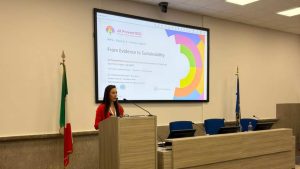
Cristina Martínez presented the work “From Evidence to Sustainability: JA PreventNCD pilots on smoke-free home environments in Catalonia and the bridge to JA-SAFE”, focused on the pilots developed in Catalonia to promote smoke-free homes and beaches and on their continuity towards future initiatives on a European scale.
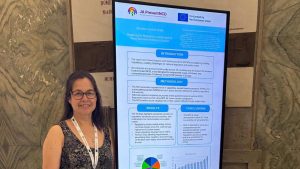
On the other hand, Marcela Fu presented the work “Gaps and ways forward in nicotine regulation: Results from new policy scale”, in which she analyzed the shortcomings in the regulation of new tobacco and nicotine products . The presentation also introduced the Nicotine Control Scale, a tool designed to assess and compare the degree of implementation of control policies between European countries. This same work, led by researchers from five countries, was also presented in poster format and was recognized with the award for best poster .
ICO, represented by members of the UCT and by Esteve Rodon , from the Girona Cancer Epidemiology and Registry Unit, actively participated in workshops, debate spaces and specific meetings of work packages, contributing to the coordination of actions and the integration of results within the global project. Participation in this General Assembly, which marks the midpoint of the project, has allowed the identification of challenges and opportunities for its final phase, with special emphasis on the sustainability of the results and their transfer to public policies.